16 May 2013

Indian computer authorities to investigate what led to $45 million ATM heist

Pune, India-based ElectraCard Services and enStage, a company with operations in Bangalore and Cupertino, Calif., were infiltrated by hackers who compromised prepaid debit cards, allowing them to steal $45 million from ATMs around the world, according to sources speaking to news service Reuters.

On Tuesday, Aabhas Pandya, a spokesperson for enStage, declined to confirm whether the company was struck, but said via email to SCMagazine.com that enStage “is in the midst of preparing a media statement” on the matter. ElectraCard did not immediately respond for comment.

Over the weekend, Gulshan Rai, director general of the Indian CERT, told Reuters that it was investigating “the technical aspect” of the attacks.

Read more: Indian computer authorities to investigate what led to $45 million ATM heist - SC Magazine

26 April 2013

Large scale financial cybercrime, state affiliated espionage lead data breaches across world

CHENNAI: Financial cybercrime and state affiliated espionage have emerged as the leading causes of data breaches all around the world. Taking the top spot for all breaches in the Verizon 2013 Data Breach Investigations Report report is financially motivated cybercrime (75%), with state-affiliated espionage campaigns claiming the No 2 spot (20%) in the No. 2 spot include cyber threats aimed at stealing intellectual property - such as classified information, trade secrets and technical resources - to further national and economic interests.

For more read .......

31 March 2013

‘Police should look for the person who first uploaded actress MMS’

Mumbai: Experts feel that the city’s cyber police will find it difficult to track down the main accused who reportedly created the morphed MMS clip of actress Mona Singh and circulated it. Investigators should find out the person who first uploaded/circulated the MMS clip instead of trying to get the IP address of the computer used to upload the objectionable content, said cyber experts. 
    On Thursday night, Singh had lodged a complaint with the Versova police about the objectionable MMS clip that has gone viral

.........
But experts feel investigators should find out the person who first uploaded/circulated the MMS clip instead of trying to get the IP address 
    According to experts, the police should seek Singh’s help to trace the main source, the person and origin of the objectionable MMS clip 
    Victims of cyber crimes can approach the cyber crime cell at the police HQ, Crawford Market, or the cyber cell police station, BKC


22 March 2013

TeamSpy snooped on governments, big biz undetected for 10 years


Computer security researchers say they have uncovered a decade-long espionage campaign against governments, businesses and human-rights activists in Eastern Europe and beyond.

We're told the spying operation was partially pulled off by subverting TeamViewer - a legitimate tool for remotely controlling computers and holding meetings online. The snoopers installed the software on victims' Windows PCs and modified the code's behaviour with DLL hijacking to open a backdoor on the compromised machines. This successful tactic earned the campaign the nickname of TeamSpy and kept the hacking crew under the radar for years.
The researchers, who are based at the Laboratory of Cryptography and System Security (CrySyS Lab), said the spying team also used custom-built malware in days gone by.
......

"The campaigns are a mix of targeted attacks and conventional cyber-crime activities, for example, banking crime operations such as the Sheldor campaign."
CrySyS Lab reckoned the attacks are the work of a small and technically skilled team that has grown more sloppy over the years as complacency set in.

.....
TeamSpy's modus operandi is similar to the approach taken by the hackers behind the earlier Red October attack, although the two operations are not thought to be directly linked. The TeamSpy crew usually roped in victims using so-called waterhole attacks based on planting malicious code on websites frequently visited by people working at targeted organisations. That attack code was also injected into advertising networks that ran across the targeted regions.

A detailed technical analysis by Kaspersky Lab of TeamSpy can be found here [PDF]. ®

....


Click here to read more ....

SOUTH KOREA UNDER CYBER ATTACK


SEOUL – Three South Korean broadcasters and two banks were hit by a major cyber attack this afternoon, in an apparently successful attack that has rendered system-wide computer networks unusable since 1400KST (0100EST).
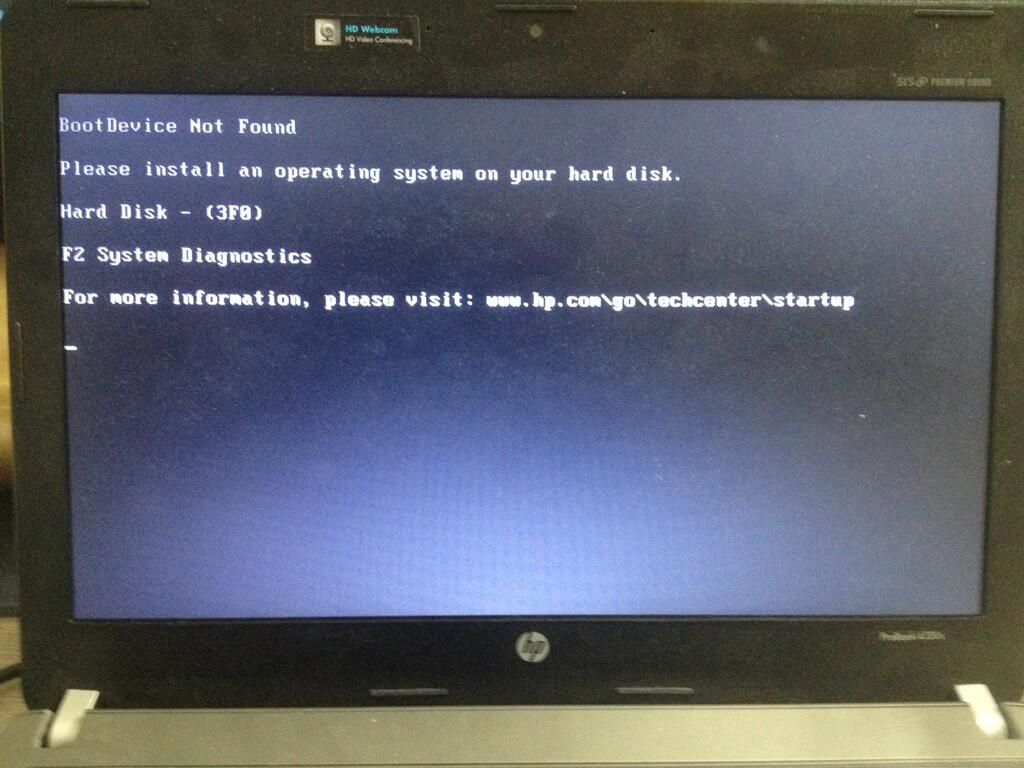
KBS, MBC and YTN were all hit by the attack, as were Shinhan and Nonghyup banks, South Korean news agency Yonhap reported. KBS staff member Luke Cleary tweeted a picture of his laptop screen, apparently showing a wiped operating system:

Although no evidence has thus-far been presented, a statement from the presidential office said they were investigating the possibility of North Korean involvement in the attack, and the military has upgraded its “info surveillance status” in response. Reuters, however, reported that a holding page from a hacking group know as the “Whois Team” appeared on an LG-owned website (see below video).
“The circumstantial evidence points towards North Korea, but that’s also the perfect cover for someone wanting to attack South Korea and cause mischief,” North Korea Tech blogger Martyn Williams told NK NEWS.
.......


Click here to read more ....


Other Links of same story :

http://english.yonhapnews.co.kr/

http://www.northkoreatech.org/

http://www.scmagazine.com

http://www.symantec.com

15 March 2013

UP police to set up crime cells in districts


In an effort to ensure speedy investigation of complicated criminal cases, the Uttar Pradesh police has decided to set up cells of its crime branch at the district-level on the lines of Delhi and Maharashtra.


"The government order (GO) for setting up of these cells has already been issued", ADG law and order, Arun Kumar told reporters here.

...
From now on, special operation groups (SOGs) have been scrapped in the districts while the special investigating teams have been merged with crime cells, the ADG said.

"Special weapon and tactics teams will also work under the crime cells", Kumar said, adding that he has discusses ways and means of better functioning of these cells with the district police chiefs.
...


Click here to read more ...... 

Britain and India to agree cyber crime joint taskforce


Britain and India are expected to agree to set up a joint task force to fight cyber crime, a move London hopes will help it safeguard the personal banking and mobile phone data of millions of Britons, much of which is stored on Indian servers.
....
It said India was set to have one of the biggest online populations by 2015 with an expected 300 million users - larger than the United States and up from the 137 million users already in India today.
......


Click here to read more ....

Cybercrime-as-a-Service – A Very Modern Business


By Vishak Raman on 7 March, 2013

Cybercrime business includes a complete range of deliverables, from attack tools and methods, consulting, services, advertising, and a myriad of programs that serve as the ‘product.’
Cybercrime business includes a complete range of deliverables, from attack tools and methods, consulting, services, advertising, and a myriad of programs that serve as the `product'. The more features or the more complex the service offered, the higher the price. A worrying new phrase has entered the lexicon of cybercrime - Crime-as-a-Service (CaaS). While the term is self-explanatory it more than adequately describes how cybercrime in the 21st Century has become commoditised. 
......
Just as with any other business, there are products and services available to be sold to customers. These include; Consulting services such as botnet setup ($350-$400); Infection/spreading services (~$100 per 1K installs); Botnets and Rentals - Distributed Denial of Service or DDoS ($535 for 5 hours per day for one week), email spam ($40 / 20K emails) and Web spam ($2/30 posts); Crimeware Upgrade Modules. SpyEye Modules as an example, range anywhere from $500 upwards to $10K. SpyEye is a prolific banking botnet that emerged in 2010 and can be upgraded to enable advanced features for money laundering.
.......


Click here to read more ....

Cyber crimes on the rise, but few pursue case to court

By, TNN | Mar 15, 2013, 01.16 AM IST

COIMBATORE: Though cyber crimes are on a steady rise in Coimbatore and the police cell dealing with it receives numerous complaints every week, a peculiar situation is emerging with petitioners refusing to proceed with the case after the person who sent the offensive data through email or mobile phone is identified and made to confess the crime.

"In most cases, the suspect is someone known to the petitioner and the petitioner is satisfied with an apology from the offender once we locate the criminal. Petitioners are preventing us from registering FIRs and ensuring a closure to the case by moving the court,'' says a senior police officer working with the Cyber Crime Cell.
....
The issues range from extra marital affairs to property disputes and clashes between family members,'' adds Ravichandran.
......
Though as many as 451 cases were reported in 2012, FIRs were registered in only 12 cases. In 2011, 1250 cases were reported but FIRs were filed only in 28 cases. In 2010, 508 cases were reported but FIRs were filed only in eight cases. In 2009, 93 cases were filed but FIRs were recorded in just three cases.
......

Click here to read more ......

Chinese hackers breach DRDO systems; steal cabinet committee on security files

Saikat Datta l @saikatd

New Delhi: A successful Chinese hacking attack has caused what is arguably the biggest security breach in India with systems of hundreds of key DRDO and other security officials being compromised and leading to the leak of sensitive files related to the cabinet committee on security (CCS), the highest decision-making body for security issues of the government of India. 
The other stolen files recovered so far belong to the governments of the United States, Russia, and South Korea.
....

As they continued to trace the breach, they discovered thousands of top secret CCS files, and other documents related to surface-to-air missile and radar programmes from DRDL, a DRDO laboratory based in Hyderabad, among many other establishments. 
Even the e-tickets of the scientists who had travelled to Delhi in February were found on the server. 
The intelligence officials also discovered documents of deals struck between DRDO and Bharat Dynamics Ltd, a defence PSU which manufactures strategic missiles and components. Some other recovered files were related to price negotiations with MBDA, a French missile manufacturing company.
But the shocking part was the extent of the hacking by the Chinese, believed to be officially sponsored. 
.......

Click here to read more ...... 

Doctors used silicone fingers to fool fingerprint scanner

The story broke when Globo TV managed to get its hands on a video that shows 29-year old doctor Thauane Nunes Ferreira first clocking in at work by pressing her own finger onto the device, then doing the same for two colleagues by using silicone fingers.

In the footage, she seems uncomfortable doing it, and collecting the slips of paper that proved that those persons checked in. After having been arrested, she admitted to doing it for a while now, but pointed out that she was coerced into doing it by Jorge Cury, the head of the emergency room

Click here to read more ......

12 February 2013

Software that tracks people on social media created by defence firm


A multinational security firm has secretly developed software capable of tracking people's movements and predicting future behaviour by mining data from social networking websites.
A video obtained by the Guardian reveals how an "extreme-scale analytics" system created by Raytheon, the world's fifth largest defence contractor, can gather vast amounts of information about people from websites including Facebook, Twitter and Foursquare.
Raytheon says it has not sold the software – named Riot, or Rapid Information Overlay Technology – to any clients.
....


The sophisticated technology demonstrates how the same social networks that helped propel the Arab Spring revolutions can be transformed into a "Google for spies" and tapped as a means of monitoring and control.
Using Riot it is possible to gain an entire snapshot of a person's life – their friends, the places they visit charted on a map – in little more than a few clicks of a button.

.....
The power of Riot to harness popular websites for surveillance offers a rare insight into controversial techniques that have attracted interest from intelligence and national security agencies, at the same time prompting civil liberties and online privacy concerns.
....
n April, Riot was scheduled to be showcased at a US government and industry national security conference for secretive, classified innovations, where it was listed under the category "big data – analytics, algorithms."
According to records published by the US government's trade controls department, the technology has been designated an "EAR99" item under export regulations, which means it "can be shipped without a licence to most destinations under most circumstances".


Click here to read more ....

11 in custody, police expect more arrests in e-fraud case

MUMBAI: After the arrest of two more persons on Saturday in connection with the Rs 1 crore bank e-fraud, the number of people caught by theMulund police in the case has risen to 11.

The police expect even more arrests in the case, which involved the transfer of money from a cosmetics company director's current account to 12 bank accounts in the city, Navi Mumbai, Thane district and Uttar Pradesh in just 45 minutes. The account of the victim, Ankur Korani, was hacked into on January 29 between 9.15am and 10am.
.....
A woman identified only as Pillai (34) and a person named Kumar (24) were the latest to be arrested. They were caught on Saturday evening when they visited the Virar branch of a private bank to withdraw Rs 6 lakh each from their accounts.

"All those arrested used fake PAN cards, voter's identity cards, and electricity and telephone bills as address proof to open bank accounts," a police officer said. "The banks were negligent as they opened the account without any background verification. The RBI should take firm action against the banks' lethargic approach."
....

Click here to read more ...... 

Cops probe insider hand in Arun Jaitley call details case

NEW DELHI: The timely detection of a plot to obtain call details of senior BJP leader Arun Jaitley has averted a political storm, but, sources say, a scandal on the scale of the Amar Singhphone tapping case in 2005 can still arise if investigation reveals the involvement of police personnel in the conspiracy.
......
The request mail was sent to telecom firm Airtel on January 17. Normally, telecom firms share details with police on receipt of official requests, but keeping in view Jaitley's stature, Airtel decided to cross check the authenticity of the request with police, saving them some blushes. 
.....
Police have learnt that the email ID of ACP (operations) Bhoop Singh was accessed by an unauthorized person, suspected to be a police officer. Officers of ACP rank and above can seek call details of a person from telecom companies. However, in the present case, senior officers were not aware of the email request. 
.....

Click here to read more ...... 

07 February 2013

Broad Powers Seen for Obama in Cyberstrikes

WASHINGTON — A secret legal review on the use of America’s growing arsenal of cyberweapons has concluded that President Obama has the broad power to order a pre-emptive strike if the United States detects credible evidence of a major digital attack looming from abroad, according to officials involved in the review. 

....
That decision is among several reached in recent months as the administration moves, in the next few weeks, to approve the nation’s first rules for how the military can defend, or retaliate, against a major cyberattack. New policies will also govern how the intelligence agencies can carry out searches of faraway computer networks for signs of potential attacks on the United States and, if the president approves, attack adversaries by injecting them with destructive code — even if there is no declared war.
....


Mr. Obama is known to have approved the use of cyberweapons only once, early in his presidency, when he ordered an escalating series of cyberattacks against Iran’s nuclear enrichment facilities. The operation was code-named Olympic Games, and while it began inside the Pentagon under President George W. Bush, it was quickly taken over by the National Security Agency, the largest of the intelligence agencies, under the president’s authority to conduct covert action.
As the process of defining the rules of engagement began more than a year ago, one senior administration official emphasized that the United States had restrained its use of cyberweapons. “There are levels of cyberwarfare that are far more aggressive than anything that has been used or recommended to be done,” the official said. 
....
While many potential targets are military, a country’s power grids, financial systems and communications networks can also be crippled. Even more complex, nonstate actors, like terrorists or criminal groups, can mount attacks, and it is often difficult to tell who is responsible. Some critics have said the cyberthreat is being exaggerated by contractors and consultants who see billions in potential earnings.
One senior American official said that officials quickly determined that the cyberweapons were so powerful that — like nuclear weapons — they should be unleashed only on the direct orders of the commander in chief. 
....
The Obama administration has urged stronger firewalls and other systems to provide a first line of defense, and then “resiliency” in the face of cyberattacks. It failed to get Congress to pass cybersecurity legislation that would have allowed the government to mandate standards. 


Click here to read more ....

Twitter clients stay signed in with pre-breach passwords

OAuth means apps can connect despite reset of passwords made unsafe by breach

Twitter has detected a breach and suggested 250,000 users change their passwords. Yet users who heed that advice will still find that apps using the Twitter API, including the company's own, allow access to the service without asking users to enter the new password.
.....
A password change performed on the web did not, however, cause Twitter's own apps for iPad (under iOS 5.1.1 on an iPad 1) or iOS (under iOS 6 on an iPhone 5) to prompt us for the new password. Instead, it remained possible to post tweets from both.
....
Other users of Twitter's iOS app confirmed the same issue, one telling The Reg that only after he deleted and re-installed the app was he prompted for a new password.
......
Twitter spokesperson Jim Prosser did not deny that clients can continue to access the service even after passwords have been changed, and told The Reg, by email, that “TweetDeck and other clients use [open authentication standard] OAuth, so as long as you don't sign out, you don't have to re-input your credential every time you open the app.”
.....

Click here to read more ...... 

Global credit card fraud: New malware behind fraud, suspect bankers

Bankers say that the spurt in credit card frauds is possibly caused by a new malware Dexter which has been used to commit digital fraud internationally.

Typically digital fraud involves hackers breaking into either a banking network or payment aggregator's server or what is being seen as more recent trend -installing a malware in the point of sale. Bankers feel this is likely because the pattern is unlike earlier cases of skimming where numbers are limited and are concentrated in some geographies.
.......
Scamsters buy individual information after sampling few card numbers. Bankers say that since cards are invariably blocked after an initial transaction, scamsters buy card information in bulk and these are sold at prices as low as $2 per card information. Once this information is available it can be used to clone cards. Theoretically, card information can be stolen from a retail chain in India, by a hacker in Russia and sold to scamsters in US.
......
Precautions to prevent cyber fraud 

Things to remember 

* Never access your banking account from a cyber cafe or a shared computer as you can never know how you are being monitored, or what spy software might be installed on those machines. 

* Always use your home computer 

* Be careful of any emails that ask you to update your bank account info. They could be an attempt at phishing, which could result in identity theft. 

* Never open any attachments from sources that you do not know 

* Do not give any confi dential information such as password, customer ID, credit/debit card number or PIN, CVV, DOB to any email request, even if the request appears to be coming from govt authorities like I-T dept or any associate company like VISA or Master Card 

* Don't click on any link that you receive in your email even if it appears to be from your bank. Instead, make it a point to remember the URL, and type it manually in the address bar before making any transactions. Scammers create websites that look and feel authentic 

* Always update your operating system for security patches. Also use a reputed anti-virus 

* When choosing a password for your banking accounts, choose something that is long and includes upper, lower case & special characters 

* Avoid using your birthdates or anniversaries as passwords as these can easily be guessed 

* Scammers use publicly available information on social networking sites to identify and lure potential victims 

* Check SSL (Secure Socket Layer)/ https security on login page of bank's website. The 's' after the 'http' denotes the site is secure 

Must do 

* Most banks recommend that you apply for a replacement credit card after returning back from a foreign trip. 

* Dealing on foreign websites could be riskier as the 2-factor authentication mandated by the RBI (besides login and PIN) is for web businesses in India only 

* Scratch out the three digit CVV number at the back of your card. Also sign the strip on your credit/debit card as it makes it tougher for anyone else to use 

* Notify your credit-card provider/bank immediately of any illegal use of your card from an online transaction. The longer you wait, the more diffi cult it can be to resolve the situation, especially if you've become a victim of identity theft


Click here to read more ...... 

Chandigarh district magistrate imposes restrictions on use of cybercafes

CHANDIGARH: Chandigarh district magistrate Mohammed Shayin has prohibited the use of cybercafes by unknown person whose identification would not be established by the owner of the cafe. The cybercafes's owners havebeen asked to maintain a register for identity of the visitor/user by making the entry of visitor's name, address, telephone number and identityproof. The visitor/user would make entry in his/her handwriting along with address, telephone number and identity proof and would sign the register kept for this purpose.
.....

This order has been issued under section 144 of Criminal Procedure Code and would be valid from the zero hour on February 7, 2013 to April 7, 2013.
The orders have been made because it was noticed that certain antisocial elements, criminals and terrorists might use the facility of cyber cafes to mislead the security/investigating agencies, create panic in the public and danger the security of public, VIPs, and government institutions.


Click here to read more ...... 

Only 46 credit card frauds in city in three years?

.......
Mumbai: On an average the 90 police stations in the city receives more than 150 complaints regarding banking fraud, hacking, phishing (besides the cases registered with the cyber crime cell and cyber police stations) but the annual crime statistics show barely a single or double-digit numbers in cases of cyber crime cases registered. However 47 cases was registered from 2010 to 2012 in credit card fraud while it was 16 for hacking and 17 for phishing or Nigerian fraud. On Wednesday, the top brasses of the Mumbai Police had taken the cyber fraud seriously called a meeting with officials of the top bankers and Cyber experts to discuss the problem and the methods that can be taken up to curb the menace.

Moreover the investigators probing the cyber related crimes, especially banking fraud, meets with a dead end after the victim and the banking party stops following the case once they get their money reimbursed from insurance company. "This has been the main cause for increase observed in case of banking frauds. In one way it is helping the cyber criminals go scot free after committing the fraud. We records all the cases and it gets reflected in our annual crime reports," said Joint Commissioner of Police (Crime) Himanshu Roy told TOI.
..........

Click here to read more ...... 

Credit card fraud higher in Southeast Asia, say banks, travel agents

CHENNAI: Credit cards may be the most convenient way to pay on a trip abroad, but in some countries it is unsafe to use them. It is riskier to swipe credit cards in Sri Lanka, Thailand, the Philippines, Malaysia, and Indonesia than in Europe, warn travel agents. 

Many travel agents have an informal list of countries where it is risky to use credit cards because information can be stolen and misused. Credit card information thieves often target tourists who buy electronics, or visit pubs and clubs. 

"We tell travelers not to use credit cards at clubs, pubs, casinos, department stores or small shops when they travel abroad. It is a risk to use ATM machines in Malaysia. There is no advisory or black list available, but we get a lot of feedback from other travel agents about customer experiences abroad," said Basheer Ahmed, an office-bearer of Travel Agents' Federation of India.

.........

Click here to read more ....